What to Keep in a Basic Kids Craft Supply Bin
A parent-first guide to stocking a small kids craft supply bin with useful basics, recycling-bin add-ons, and parent-controlled supplies.
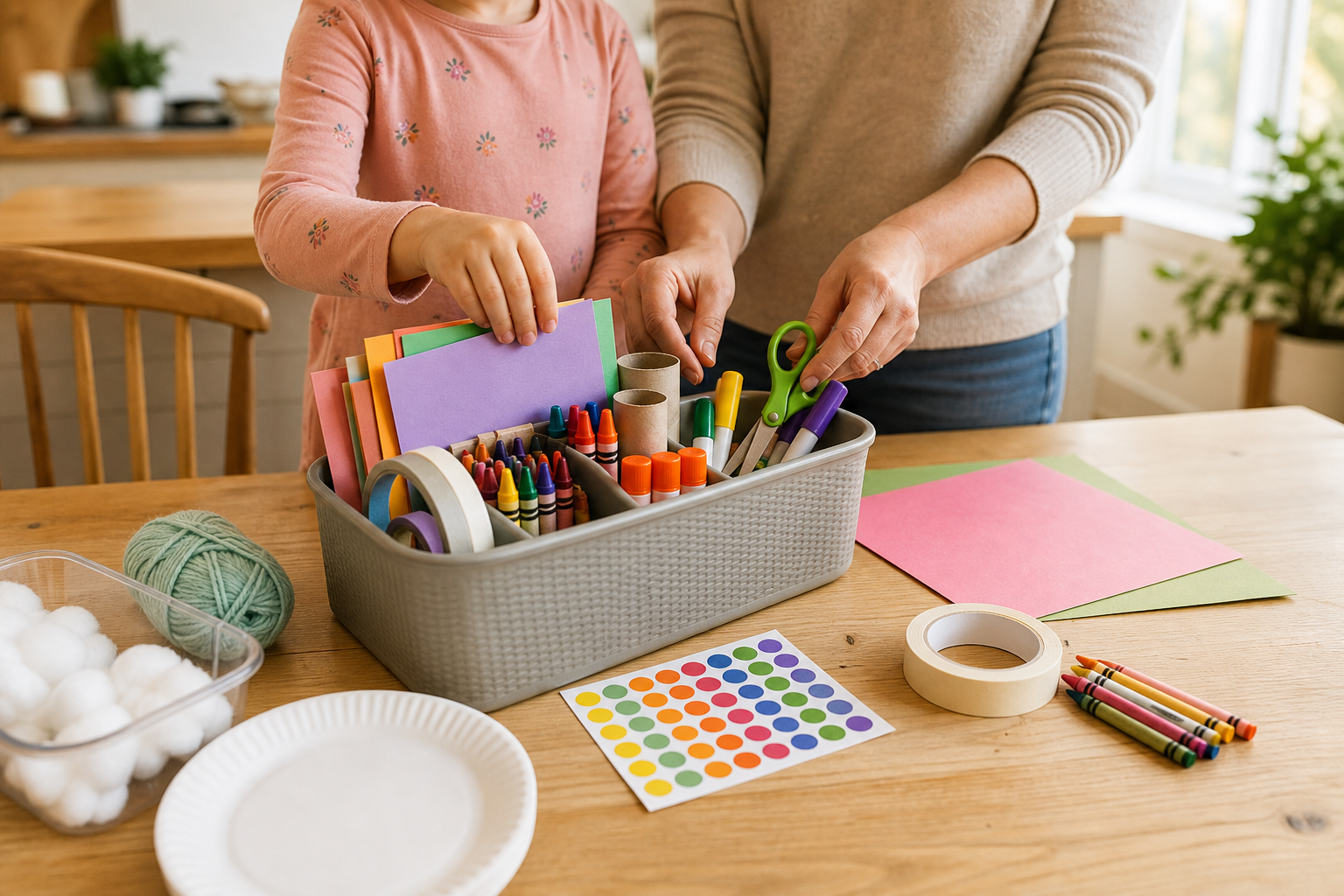
A good kids craft supplies setup does not need to look like a craft store. For most families, the more useful goal is a small bin that can start a rainy-day project, an after-school reset, or a quick screen-free activity without a store run or a huge cleanup afterward.
The trick is to stock supplies by how often they get used, how much mess they create, and what they help your child make. Start small. Add slowly. Keep the supplies that create the most options.
Start With Kids Craft Supplies You Will Actually Use
Before buying more, picture the craft moments that happen in your house. Do you mostly need something for twenty minutes before dinner? A weekend table project? A backup plan for sick days, summer afternoons, or rainy-day crafts?
That answer matters more than the fanciest supply list. A useful craft bin should help you say yes to realistic making time. It should also make it easier to say no to supplies that are fun in theory but annoying on a normal Tuesday.
Use three categories:
- Everyday bin: supplies kids use often and you are comfortable putting on the table.
- Recycling add-ons: clean household materials that turn into buildings, creatures, cards, props, and collages.
- Parent-controlled shelf: supplies that are useful but need supervision, boundaries, or a better cleanup plan.
If you keep those categories clear, craft supplies stop feeling like clutter and start feeling like a ready-to-use system.
The Core Everyday Bin
The everyday bin should be small enough to pull out quickly and useful enough to make several kinds of projects. You do not need every color, texture, and novelty item at once.
Start with:
- Printer paper and construction paper.
- Crayons, washable markers, and colored pencils.
- Masking tape or washi tape.
- Glue sticks.
- Child-safe scissors for kids who are ready to use them with supervision.
- Stickers.
- Paper plates.
- Cardboard tubes.
- Yarn or string.
- Cotton balls.
- A small tray, mat, or washable tablecloth.
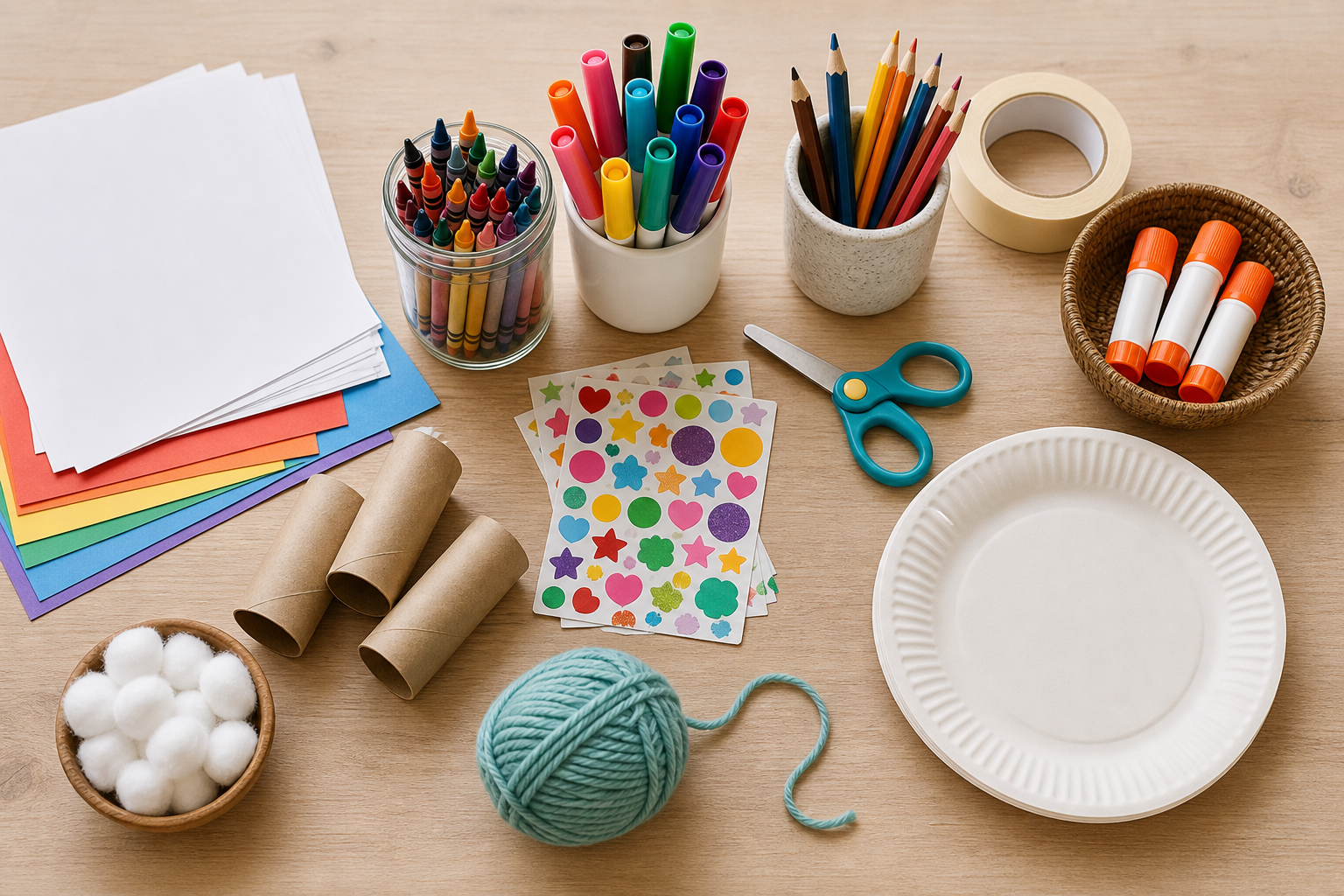
Core kids craft supplies arranged on a table
This set covers drawing, folding, cutting, collage, decorating, simple building, puppets, crowns, paper chains, cards, masks, cardboard creatures, and texture projects. It is not glamorous, but it works because the supplies combine in many ways.
For younger children or mixed-age siblings, use your own judgment and product labels. Tiny pieces, sharp tools, liquid supplies, and anything that goes near mouths should be handled with more adult control.
What Each Supply Unlocks
A starter bin is easier to maintain when every supply has a job. This keeps you from buying things just because they look cute in the aisle.
| Supply | What it unlocks | Best for | Store it where |
|---|---|---|---|
| Paper | Drawing, folding, cards, books, collage | Almost any quick craft | Everyday bin |
| Crayons and washable markers | Color without drying time | Low-mess table projects | Everyday bin |
| Tape | Building, attaching, decorating | Cardboard, paper, and quick repairs | Everyday bin |
| Glue sticks | Collage and paper assembly | Lower-mess sticking | Everyday bin |
| Child-safe scissors | Cutting shapes and fringe | Kids ready for scissor practice with supervision | Everyday bin or adult shelf |
| Stickers | Fast decorating and story scenes | Low-setup creative time | Everyday bin |
| Cardboard tubes | Creatures, rockets, towers, binoculars | Building and pretend play | Recycling zone |
| Yarn | Wrapping, texture, hanging, hair, tails | Tactile projects without wet mess | Everyday bin |
| Cotton balls | Clouds, snow, animal texture | Soft collage and seasonal crafts | Everyday bin |
| Paint and liquid glue | Color, texture, stronger attachment | Planned projects | Parent-controlled shelf |
The goal is not to make the bin perfect. It is to make it obvious what to grab when a child says, "Can we make something?"
Add A Recycling-Bin Zone
Some of the best craft materials are already passing through the house. Clean cardboard boxes, paper towel tubes, egg cartons, paper bags, magazines, gift wrap scraps, cereal boxes, and safe packaging pieces can become castles, ramps, puppets, instruments, robots, animal homes, or collage backgrounds.
Keep this zone small. One grocery bag or one shallow bin is enough. If it overflows, recycle the extras and keep only the shapes your child actually uses.
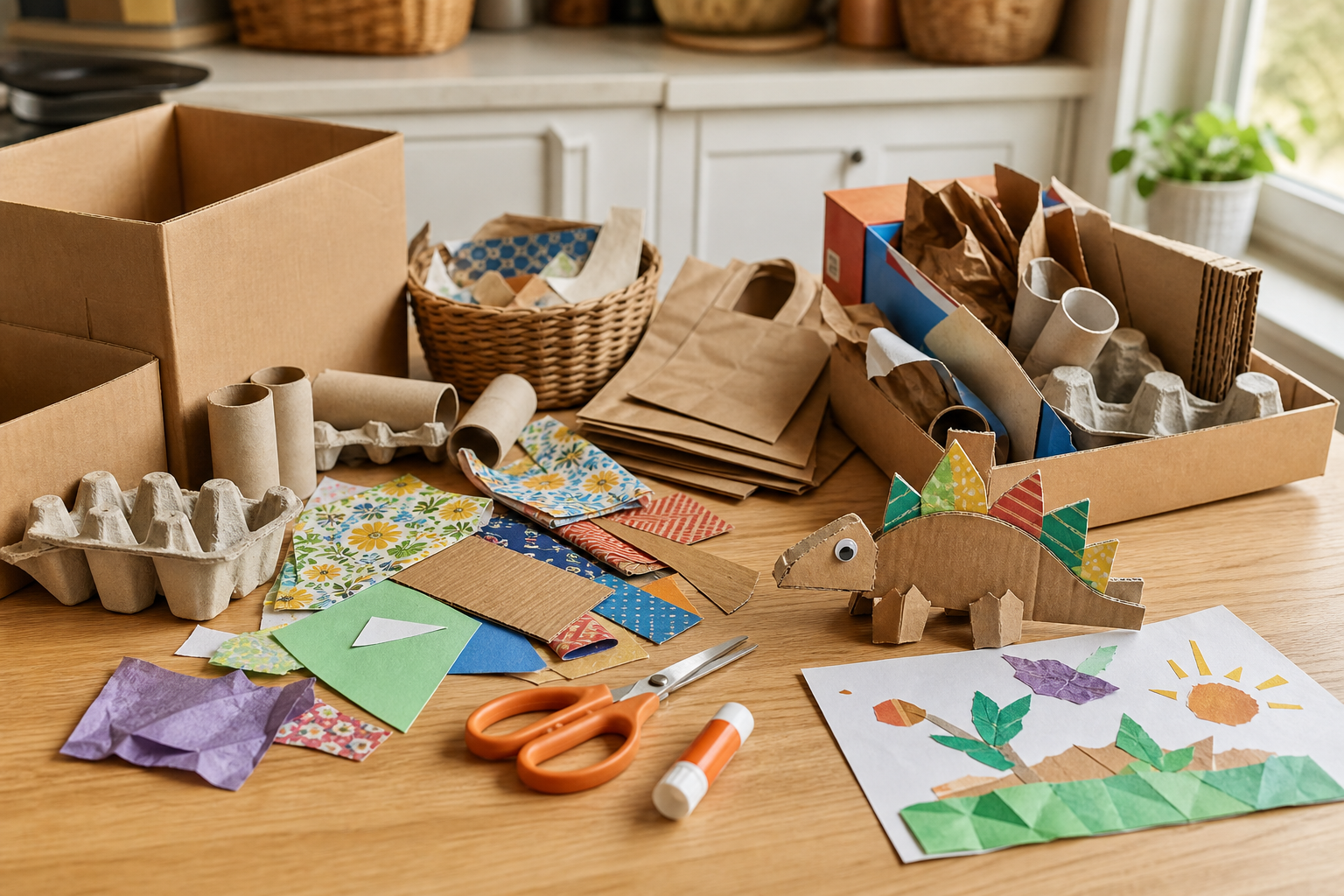
Recycling-bin materials ready for simple kids crafts
Recycling-bin materials also help reduce the feeling that every craft requires a purchase. If you have paper, tape, crayons, and a box, you have enough for a building activity. If you have paper plates, yarn, and stickers, you have enough for masks, faces, animals, or weather wheels.
Craft Together can make this easier once you know what you have on hand. You can look for crafts by supplies, age, time, mess level, and difficulty, then use Make Now to start with materials already in the house.
Keep These Supplies Parent-Controlled
Some supplies are worth keeping, but not necessarily in the everyday bin. Parent-controlled does not mean off-limits forever. It means you decide when the setup, supervision, and cleanup make sense.
Good parent-controlled supplies include:
- Washable paint.
- Liquid glue.
- Glitter or glitter glue.
- Permanent markers.
- Small beads, buttons, sequins, and tiny embellishments.
- Hole punches, staplers, craft knives, hot glue, or specialty tools.
- Air-dry clay, slime ingredients, or sensory bin fillers.
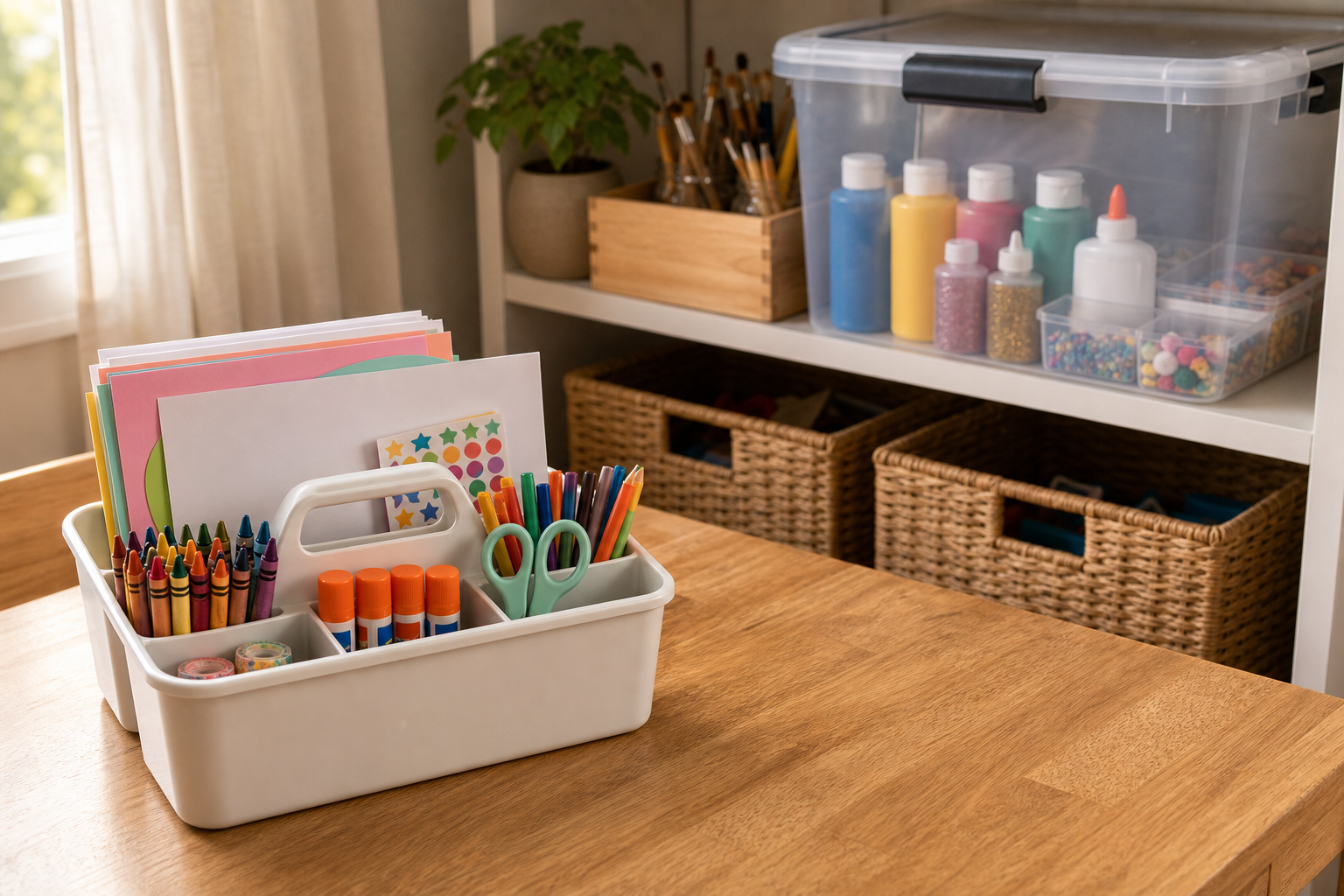
Child-accessible craft supplies separated from parent-controlled supplies
This separation helps children use the accessible bin more independently while keeping messier or more age-sensitive materials from appearing at the wrong time. It also gives you a calm way to say, "Paint is a weekend project," instead of negotiating after the bottle is already open.
Skip These Until A Project Needs Them
The easiest way to overspend on craft supplies is to buy for an imaginary future project. Specialty kits, oversized multipacks, huge paint assortments, novelty foam shapes, glitter-heavy materials, tiny beads, and one-purpose tools can all wait until you have a specific plan.
Skip anything that needs special storage before you know you will use it. Skip supplies that create stress every time your child sees them. Skip materials that are only exciting because they are new.
A simple restock rule helps: replace what gets used, not what looks good in a cart. If your child uses glue sticks constantly, buy more glue sticks. If the pom-poms have been untouched for months, you do not need a larger bag.
Store And Restock Without Clutter
A craft bin works best when everyone knows where things go. Use one caddy, basket, drawer, or lidded box for everyday supplies. Put parent-controlled supplies in a separate closed bin or higher shelf. Keep recycling materials limited to one container.
Every month or so, do a quick reset:
- Toss dried-out markers.
- Recycle scraps that are too tiny to use.
- Move specialty supplies back to the parent-controlled area.
- Restock the basics that are actually running low.
- Save one or two finished projects, photograph the rest, and let the bulky extras go.
Once your basics are sorted, Craft Together can help you use the supply bin instead of just organizing it. Save craft ideas that match your basics, plan supplies for projects you want to try later, and keep photos or notes from finished projects in your family's private memories.
The best craft supply bin is not the biggest one. It is the one that makes creative time easier to start, easier to clean up, and easier to repeat on the days when your family actually needs it.